
Navigating the Next Wave of Global Biopharma Innovation: A Roundtable Discussion about Business Development, Entrepreneurship, and China Biotech
---Round Table Discussion at CBA 2026 Annual Conference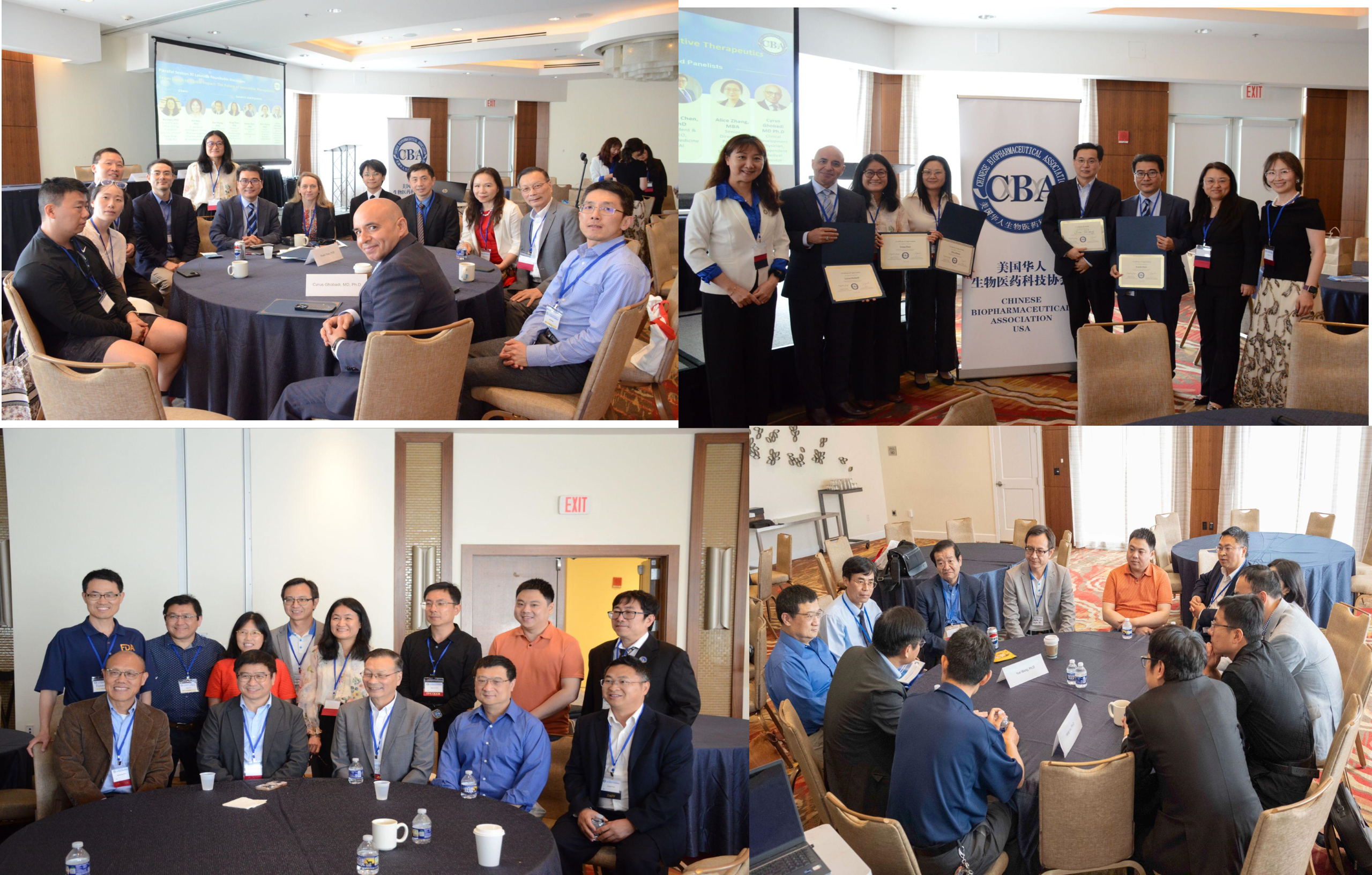
Executive Summary
This article summarizes a roundtable discussion held during the 31st Annual Conference of the Chinese Biopharmaceutical Association. Focused on timely industry themes including business development, entrepreneurship, China biotech, and global innovation strategy, the discussion was informed by ongoing research from Johns Hopkins Carey Business School and the University of Maryland Robert H. Smith School of Business.
The roundtable explored the next wave of biopharma innovation and globalization through insights from speakers and participants representing a broad spectrum of the industry. The conversation connected strategic research with real-world experience across biotech, diagnostics, pharmaceutical R&D, CRO/CDMO services, healthcare institutions, finance, entrepreneurship, academia, and policy.
Four connected themes shaped the discussion: how shared biology meets the complexity of different markets and cultures; how pricing and reimbursement influence value and incentives; why the US market remains strategically important; and how China and the US represent different paths for moving innovation from discovery to development and global scale.
Taken together, these themes suggest that science remains the foundation of biopharma, but scientific promise must still move through political, regulatory, and market barriers before it can reach patients. The value of health should remain central despite geopolitical uncertainty and socioeconomic divides. Opportunity is real, but competence is indispensable.
For the future biopharma industry, the winning equation is not only relevant to China biotech, but to global innovators: strong science, disciplined execution, cross-market trust, and a shared commitment to improving health.
About the Event
On June 6, 2026, the 31st Annual Conference of the Chinese Biopharmaceutical Association was held in Gaithersburg, Maryland, under the theme “Drug Discovery and Development in the Era of AI: Innovation, Differentiation and Globalization.”
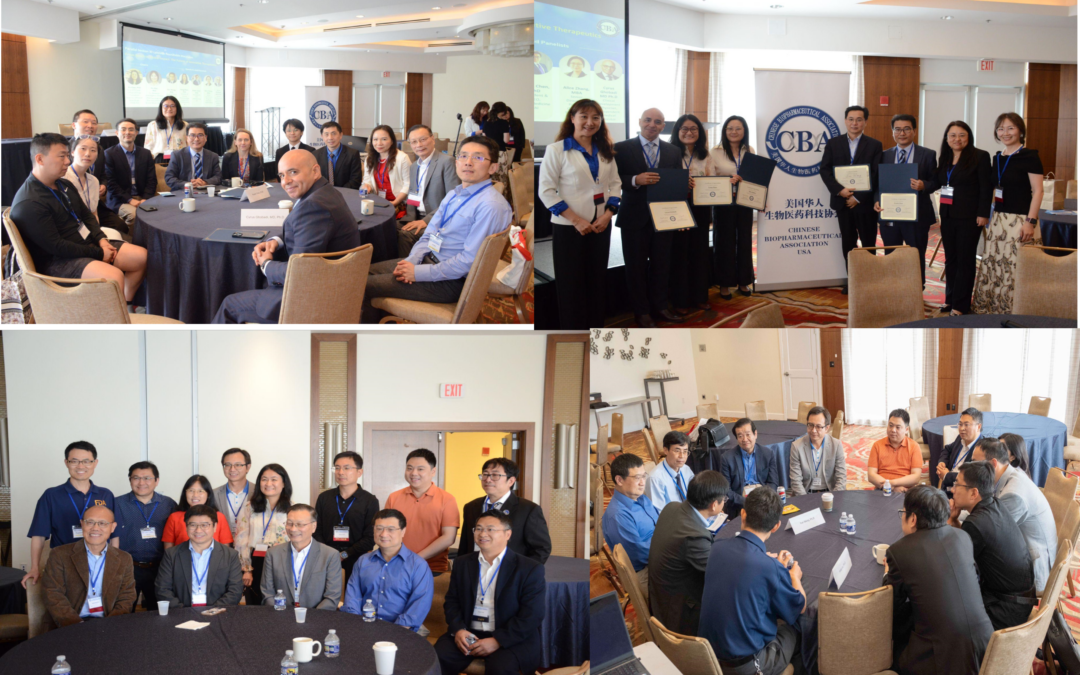
As part of the conference, a lakeside roundtable on business development, entrepreneurship, and China biotech was organized to foster open conversation and in-depth exchange among industry leaders, entrepreneurs, investors, researchers, and policy experts. The session was co-organized by Dr. Ru Chen and Dr. Xin Wei of BMS.
The discussion was shaped by ongoing research from Johns Hopkins Carey Business School and the University of Maryland Robert H. Smith School of Business, led by Dr. Frank Chen, on the strategic rise of China’s biopharma innovators at the crossroads of globalization. The roundtable used this research as a framework for a timely question: can the health imperative transcend geopolitical headwinds and social divides, and can science move faster than politics?
Who Attended
The two lead speakers were Dr. Frank Chen, principal investigator of the Johns Hopkins research, who brought expertise in health innovation, biopharma strategy, and entrepreneurship, and Dr. Cyrus Ghobadi, a former senior executive with extensive experience at AbbVie, Lilly, and AstraZeneca.
The roundtable also brought together participants from across the global biopharma ecosystem, including biotech, diagnostics, pharmaceutical R&D, CRO/CDMO services, healthcare institutions, data science, finance, academia, entrepreneurship, and policy. They represented organizations at different stages, from early-stage startups and growth-stage ventures to publicly listed firms. The discussion was also joined by Dr. Yang Lu, founding president of CBA, CEO of Sirnaomics, and a successful serial entrepreneur, whose perspective added important insight into biotech entrepreneurship, global strategy, and the evolution of China-related biopharma innovation.
Many participating companies are model firms in the Johns Hopkins research, adding practical insight into cross-border development, market entry, financing, clinical execution, and strategic partnerships. The discussion also benefited from the perspective of a Johns Hopkins SAIS scholar with expertise in international relations, connecting biopharma innovation to geopolitical uncertainty and China-US relations.
Together, the participants offered a cross-sector and cross-stage view of how science, capital, regulation, clinical evidence, and market access shape global biopharma innovation.
Key Themes from the Roundtable
1. Shared Biology, Different Systems
The discussion began with a central question for global biopharma: if human biology is broadly shared, why does innovation still face such different pathways across markets?
Dr. Chen framed the issue by referring to an earlier panel exchange: one view emphasized that “we are all human” and biology works across populations, while another warned that limited collaboration could leave patients behind. This led to the broader question of whether the health imperative can transcend geopolitical tension, and whether science can move faster than politics.
Dr. Ghobadi noted that while biology may be broadly consistent, healthcare systems, regulatory expectations, cultural conditions, and patient behaviors vary significantly across countries. Citing Japan’s PMDA from prior industry experience, he emphasized that companies cannot assume one protocol or development strategy will transfer smoothly across markets.
He also noted that regulatory systems are evolving to reduce unnecessary barriers. Biosimilars were one example: FDA expectations have shifted away from some costly efficacy and interchangeability studies toward greater reliance on PK/PD, biomarker, and comparability evidence.
The broader lesson was that global biopharma must understand both shared biology and local systems. Science provides the foundation, but regulation, culture, clinical practice, and market-specific evidence requirements determine how innovation reaches patients.
2. Pricing Pressure and the Value of Innovation
The discussion then turned to pricing and reimbursement, where the question of innovation value became more concrete. Dr. Chen noted that the US spends roughly 20% of GDP on healthcare, yet often lags peer countries in quality measures. Pharma is frequently a target of criticism, even though drug spending represents only a smaller share of total healthcare costs compared with physician services and hospital fees.
Several participants emphasized that true R&D value should be rewarded, especially for first-in-class therapies, new mechanisms of action, and innovations that create meaningful patient benefit. At the same time, they drew a distinction between value created through R&D and profit captured through delivery or system intermediaries. Innovation should be rewarded, but excessive value capture after the product enters the healthcare system should be minimized.
The discussion also recognized that value can be created in different ways, not only through new molecules but also through improved delivery, dosing frequency, administration route, and patient convenience. Examples such as injectable versus oral therapies, or weekly versus monthly dosing, showed how product value is shaped by both science and use in real-world care.
From a global strategy perspective, Dr. Chen noted that market scale and pricing potential remain major reasons companies seek entry into the US market. Dr. Ghobadi added that pricing plays different roles across regions. In the US, lower cost alone does not drive FDA acceptance. In the EU and UK, pricing and reimbursement carry greater weight because of more centralized payment systems. In many other markets, FDA endorsement remains highly influential.
The broader lesson was that biopharma value is shaped by both innovation and system design. The challenge is to reward scientific risk-taking while ensuring that healthcare spending supports patient access, clinical value, and sustainable innovation.
3. The Strategic Pull of the US Market
The discussion then turned to why the US remains a critical market for global biopharma companies, especially for China biotech entrepreneurs. Building on the research findings, Dr. Chen noted that market scale and pricing potential are among the strongest reasons companies seek to enter the US market.
From an entrepreneur’s perspective, Dr. Lu reinforced that the US market remains highly valuable because of its strong economy, pricing potential, accessibility, and continued demand for new medicines. As he summarized, the bottom line is that the US needs more drugs. This creates an opportunity for Chinese innovators, particularly when multinational companies are seeking new assets to strengthen their pipelines.
The discussion also highlighted China’s potential advantage in efficient early development and proof of concept. For global partners, China-originated innovation can offer speed and productivity. However, participants also noted a key challenge: early clinical studies conducted in China can be difficult for overseas partners to monitor closely. As a result, high-quality clinical study output will be essential.
Dr. Ghobadi added the multinational pharma perspective, noting that workforce restructuring and turnover inside large pharma can reduce productivity and create openings for focused innovators. The opportunity is real, but it depends on execution. For Chinese biotech companies, the real test is whether they can turn development speed into credible clinical evidence that can stand across markets.
4. China and the US: Different Paths Through the Innovation Gap
The discussion then turned to a larger question: has China created an alternative path to US-based biopharma innovation? The answer was not framed as replacement, but differentiation. Participants described the two systems as both competitive and distinct. The US remains stronger in basic breakthroughs and first-in-class innovation, while China has become highly effective in early development, best-in-class strategies, and disciplined execution.
The contrast also reflects differences in infrastructure and funding. US biotech is often shaped by venture capital cycles, where even a small company with a strong molecule may struggle to secure continued funding. China, by contrast, was described as having multiple funding sources, including private capital, venture investment, philanthropic or nonprofit funding, and government-related support. These funders may have different expectations, but together they can create a lower-friction path for advancing candidates through early development.
Participants noted that China’s advantage is not simply pipeline volume. It is the ability to move promising programs through development with speed, focus, and operational discipline – so valuable to move biopharma innovation across the infamous “death valley”. At the same time, this model carries its own pressures and risks, including changing investor expectations and the need to maintain evidence quality.
The broader lesson was that global biopharma is no longer shaped by a single innovation model. The US and China represent different paths through the innovation gap, each with its own strengths, constraints, and opportunities for global collaboration.
Closing: Different Paths Toward One Goal
The roundtable ultimately returned to Dr. Chen’s opening question: whether the health imperative can transcend geopolitical challenges, and whether science can move faster than politics. The discussion led to one shared conviction: the value of health should remain at the center of global biopharma innovation.
Despite differences across systems, science remains the foundation! Yet scientific promise must still move through political, regulatory, and market barriers before it can reach patients. For Chinese biopharma innovators, the opportunity is real, but execution will shape the advantage. The next edge may come from high-quality evidence, regulatory credibility, and the ability to build trust across markets.
This may be the winning equation for the future biopharma industry – not only for China biotech, but for global innovators: strong science, disciplined execution, cross-market trust, and a shared commitment to improving health.
—-By Kenny Hsu, MS, and Frank Chen, PhD, EMBA
Johns Hopkins University Carey Business School